Showing posts with label Best IVF Doctor in Faridabad. Show all posts

Monday, 28 November 2022

Reduce your chances of repeated IVF failure


IVF can see as a ray of hope. It has been a way to parenthood for many couples across the world. IVF is mostly looked at as a last hope. IVF is mostly used in cases of aged women or women with blocked or damaged fallopian tubes. It is also preferred by couples with unexplained infertility.

Though IVF has a great success rate than other infertility techniques. When all the other fertility methods fail, people go for IVF.  The couples who have undergone an IVF cycle, most have been successful, but there would be a few who have faced a failed treatment.  A failed first cycle can take a toll on you emotionally and mentally.

When you decide to go for second round of IVF, you have mixed feelings. It’s both harder and easier than the first round. We tell you how to go into your next cycle all prepared physically, mentally and emotionally:

Case review

If you are going ahead to the second IVF, your specialist would review your previous case history and find the lackness in first IVF attempt. They can suggest you some more test and can compare it from the last one. This review can help to reduce your chances of repeated IVF failure.

Re Evolution

They may ask for complete chromosome screening of the embryo prior to implantation. This testing offers a dramatic improvement in second IVF attempt and reduction in miscarriage as well as the ability to reduce the risk of multiple gestation by transferring only one chromosomally normal embryo.

Lifestyle changes

Before going ahead take care of yourself. We know it’s devastating after IVF failure. The mother needs to be healthy in mind as well as physical aspect. Changing things can help you in various ways. Small changes like exercises, taking more fertility supplements, therapy etc. make a big difference and help you stay positive. Being optimistic and staying positive is good for you. Going with the flow will help you.


Asha IVF & fertility centre employs a range of advanced tools and techniques to improve the success of embryo transfer during an IVF cycle. If you would like to learn more about the options available for overcoming recurrent implantation failure or discuss your fertility needs with a specialist, feel free to visit Best IVF Clinic in Faridabad.


Source Link : https://ashaivf.com/blog/reduce-your-chances-of-repeated-ivf-failure/

Friday, 10 June 2022

IVF: Stages and Procedure

 IVF: Stages and Procedure

Some women face a lot of difficulties in conceiving. According to a survey, about 6.7 percent of women suffer from fertility problems. There are many different reasons for fertility. Infertility can happen not only in women but also in men and it makes it difficult to conceive.

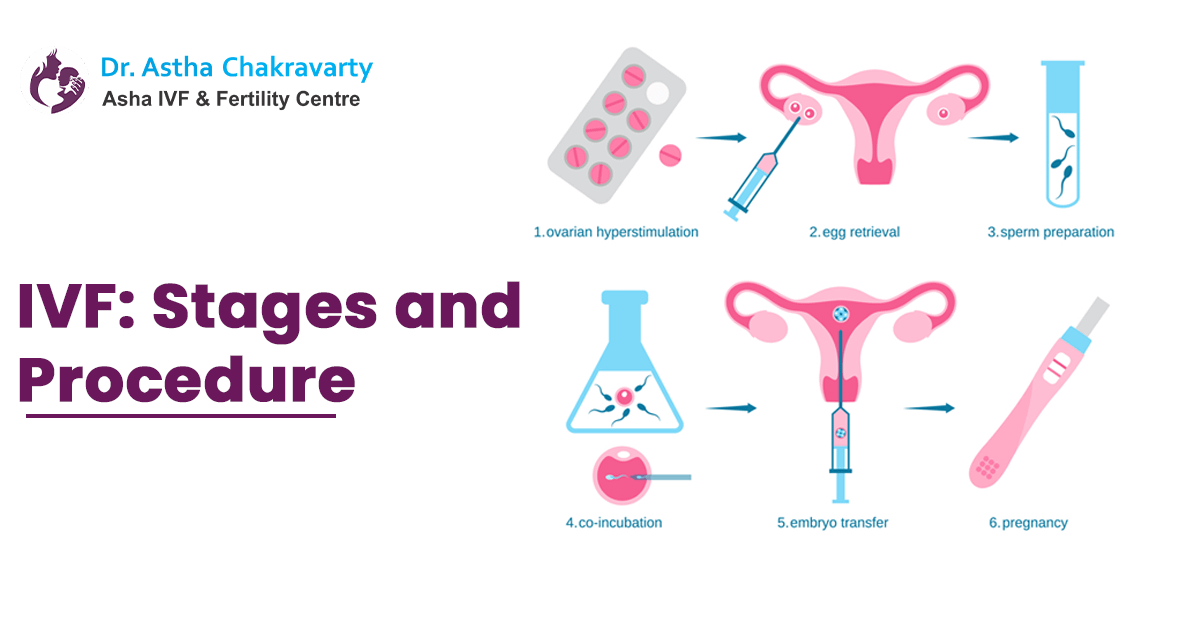
Medical science has introduced the IVF procedure to give the happiness of a child to an infertile couple. In this procedure, the egg is removed from the woman’s ovary and fertilized in the lab with the man’s sperm. After fertilization, the prepared embryo is transferred to the woman’s uterus. There are many steps involved in the process of IVF, so let us understand IVF Treatment Step by Step in detail.

Injections for excessive egg development

Initially, when a couple goes for IVF, the specialist starts with retrieving the eggs. They stimulate egg development by Injections (stimulating drugs) in women’s ovaries for maximum development of eggs. More eggs increase the chances of IVF being successful.

Egg hatching process

After 10 to 12 days of the injection, the developed egg is retrieved with the help of a special suction mechanism. During this procedure, the woman is given anesthesia so that she does not feel pain. Then eggs are placed in a test tube. Then after 20 hours, it is checked whether the process was successful or not. The best eggs are selected for transfer.

Sperm or semen sample

After the egg is retrieved, a sample of the male’s sperm is taken. This sample is sent to the lab for testing. After testing the sperms, the best and healthy sperm are selected for fertilization.

Fertilization of egg and sperm

Fertilization is done after the eggs and sperm have been obtained. There are two ways to fertilize an egg, in vitro fertilization (IVF), where the egg and sperm are placed in a Petri dish for fertilization; or intracytoplasmic sperm injection (ICSI) in which a single sperm is injected into the cytoplasm of an egg.

Embryo Culture

After fertilization of the egg and sperm, the embryo is placed in the incubator, where the embryo gets the proper environment to develop and grow. The embryo develops into the blastocyst stage on the fifth day after fertilization and till then it remains under the supervision of an embryologist.

Embryo Transfer

Once the embryo develops to the blastocyst stage, it is transferred to the uterus with the help of a catheter. After the embryo is transferred to the uterus, it gets implanted in the lining of the uterus.

Confirmation of pregnancy

And after two weeks, the beta-HCG (human chorionic gonadotropin) hormone is checked by a blood test to see whether the fetus is stable or not. If the fetus is stable and all reports are good then your IVF is successful.

Are you seeking help for IVF or fertility treatment, plan your visit to Best IVF Clinic in FaridabadAsha IVF, and the fertility center. We are committed to providing compassionate and ethical fertility treatment.

Source Link: https://drasthachakravarty.com/ivf-stages-and-procedure/

Wednesday, 13 October 2021

Surrogacy: does child genetically relate to parents?


Generally, people who consider ART treatments have many queries and concerns, especially for surrogacy. They opt for surrogacy as a last option. There are many questions for surrogacy they have in their mind that

  • Is my baby genetically related to the surrogate or to me?
  • Does the baby look like a surrogate?
  • Is it allowed for a biological bond with the child?

 Dr. Astha Chakravarty from Asha IVF and Fertility Centre focuses to aware their patients about surrogacy and its facts. She said it is necessary to educate people about surrogacy and its outcome, genetic effects, and pros & cons. This entire means has to be transparent with your patients.

Here we are trying to answer your queries that your surrogate child is genetically related to you or not.

Know the surrogacy


Surrogacy is a fertility treatment in which a woman carries and delivers a pregnancy for another couple. For infertile parents, Surrogacy is a way to fulfill their dreams of parenthood. Surrogacy completes families. For those who have struggled with infertility. 

The genetic dependency of the child is depending on the gametes used during the procedure.  In surrogacy either we use intended parents’ gametes or donors’. This is totally depending on the parents’ fertility condition and decision.

For example, Gestational surrogacy can help both parents genetically bond with the baby. The intended mother’s eggs are extracted and fertilized by the intended father’s sperm. The embryo is then transferred to the surrogate’s womb for implantation. And in traditional Surrogacy, the surrogate’s egg is fertilized by the intended father’s or donor’s sperm, using artificial insemination. In this case, the mother’s eggs could not be used.

These gametes have DNA which determines the baby’s look and genetic dependency. There is a possibility that children can be genetically dependent on a surrogate or the donor if their gametes are used in methods. But it doesn’t have a 100% guarantee of their look.

It doesn’t have any mean that how your child looks like. Remember that a child fills your life and house with happiness, for which you were waiting for a long time. You are the only parents of your surrogate child. Your love cannot be depending on the DNA. Surrogacy is a safe and aesthetic way to get your own baby.

Contact with the Best Surrogacy in Faridabad, Dr. Astha Best Fertility Specialist in Faridabad is here for your services and gives you proper guidance so that you can fulfill your dream of becoming a parent.


Thursday, 7 October 2021

HOW EFFECTIVE IS IVF IN TREATING COMPLICATED INFERTILITY?


In the case of infertility that is complicated, you’ve been trying to get pregnant for more than a year, but your doctor has found no obvious issue, such as blocked fallopian tubes. However, that doesn’t mean you won’t get pregnant. The results of studying thousands of people in this situation have shown that many of them naturally or after fertility treatment ended up with healthy children.

THESE CAUSES CAN MAKE COMPLEX

Even though every patient is unique and every treatment is customized, specialists at Asha IVF & Fertility Centre count on the common causes that reduce your fertility. Many factors contribute to infertility or complicated cases, but age is the most common.

Irregular Ovulation

Releasing an egg regularly may not happen. Ovulation can be affected by hormonal imbalances, substance abuse, thyroid conditions, severe stress, and pituitary tumors, to name just a few.

Obstacles To The Fallopian Tubes

Tubal factor infertility is usually caused by pelvic inflammatory diseases such as Chlamydia and gonorrhea.

All of these factors are considered impediments to conception, including tube malignancy, blocked tubes, and ectopic pregnancy. Ectopic pregnancy is particularly dangerous to the mother, and immediate medical attention is needed in this issue.

Factors Affecting Males

It is not uncommon for a male to have infertility caused by the malefactor and is as often the cause as female infertility. Although age can affect sperm’s viability, it does not have the same effect on an egg’s viability as it does on a woman’s. 10% of infertile couples have other factors contributing to their inability to conceive naturally along with male factor infertility.

The Uterus Cause

Polyps, fibroids, septum, and adhesions to the uterine cavity are included. In contrast, polyps and fibroids can form on their own at any time, while other abnormalities (like a septum) are present at birth. The formation of adhesions may occur after a surgery like dilation and curettage (D&C).

INFERTILITY CASES CONTAINING COMPLEX FACTORS REQUIRE A CUSTOMIZED APPROACH

The fertility expert Dr. Astha Chakravarty (Best Gynaecologist in Faridabad) believes that individualized care is the only way to manage the reproductive health of her patients. Using advanced reproductive technologies, Dr. Astha can determine the underlying cause of infertility and customize a treatment protocol to resolve it.

Dr. Astha attends to each case with the utmost attention to detail. Infertility cases with complex conditions should be handled in this manner. The dedicated team at Best IVF Clinic in Faridabad will make your appointments more comfortable, and you’ll feel completely fine.

THE SUCCESS RATE OF IVF IN COMPLICATED CASES

Infertility treatments such as IVF have been proven to be effective for decades. It is not a promise, but for many couples, it has been an incredibly valuable part of their lives forever, and we wish the same for you.

The global success rate for IVF is 35%. Many clinics claim success rates of over 90%; however, there are several factors to consider when calculating the success rate, such as the implantation rate, pregnancy rate, and live birth rate. Moreover, the IVF success rate will differ from the IUI and ICSI success rates.

IVF success rates will also be lower for their first cycle versus their second cycle and so forth. Therefore, there is a great need for you to conduct thorough research so you can learn more about success rates, and don’t hesitate to contact Dr. Astha Chakravarty (Best Gynecologist in Faridabad) a fertility expert at Best IVF Centre in Faridabad.


Thursday, 16 September 2021

AN OVERVIEW OF IVF MYTHS & FACTS


The IVF process and other assisted reproductive techniques have numerous myths associated with them. Unfortunately, most of the problems are a result of a lack of adequate knowledge of most of these procedures. As these misconceptions are cleared up, the social stigma against such methods will be diminished as well. Some of these kinds of IVF myths have been outlined by the doctors at Best IVF Faridabad center.

IVF myth – 1: Only the wealthy and famous can afford it

FACT: As compared to various other surgical treatments, IVF is a little more expensive but still less costly. Dr. Astha Chakravarty, the Best Gynecologist in Faridabad, explained that their expenses have not increased in recent years.

IVF myth – 2: IVF is 100% effective

FACT: The success rate of IVF is approximately 40% among partners younger than forty. Additionally, the success rate of IVF is determined by a variety of factors, including age, the cause of infertility, and also hormonal as well as natural difficulties.

IVF myth – 3: IVF can resolve all infertility issues

FACT: There are numerous assisted reproductive techniques currently available, and also IVF is one of these. Several other methods consist of ovulation induction (OI) with medicines, Intra Uterine Insemination (IUI), and so on which could aid childless partners to have a baby clarified Dr. Astha Chakravarty, the Best Gynecologist in Faridabad.

IVF myth – 4: IVF is not safe or effective

FACT: Only a small percentage of patients have been experiencing any complications due to ovarian hyper stimulation disorder, meaning most of these patients are safe and sound.

IVF myth -5 “Multiple pregnancies are possible”

FACT: While it is possible to become pregnant with multiples with IVF, you are only more likely to become pregnant with a viable embryo once the procedure has been completed. A single embryo transfer boosts your chances of having a successful outcome in IVF, according to doctors at Best IVF Faridabad center.  

In cases of multiple embryo transfer, there is a greater risk of miscarriage, labor complications, and pre-term birth. Multiple embryo transfers are assumed to increase the likelihood of a successful outcome by many prospective parents. Contrary to popular belief, it is the opposite. It is most preferable to perform a single embryo transfer to ensure the health of both mother and child.

IVF myth – 6: Different pregnancies result from IVF

FACT: The risk of this process associated with many pregnancies, particularly among young women, is drastically reduced by limiting the number of embryos transferred.

Here is a myth-busting guide to help you clear up your concerns shared by Best Gynecologist in Faridabad  Dr. Astha Chakravarty, who exposed the most common ones. IVF myths should not cause you any confusion. If you have a question, don’t hesitate to contact a fertility specialist or team member.


Sunday, 4 April 2021

Benefits of breastfeeding


To give birth and breastfeeding both are valuable for a woman. Breast milk is like nectar for a baby.  The best Gynecologist in Faridabad says Mother's milk gives the baby all the necessary nutrients and protects him from many diseases. Since, babies are very soft and delicate, the ability of the infant to fight against diseases at birth is also very low, and so it is very important to breastfeed the baby.

After delivery, the first yellow thick milk from the mother's breasts is called colostrum.  The best infertility specialist in Faridabad Dr Astha Chakravarty adds that People often do not give this milk to a newborn child because of superstition, saying it is dirty and bad milk.  But you should know that it is most beneficial for the newborn. It is thick condensed milk coming out for a few days immediately after the birth of the baby.  The first milk of the mother is also called the first vaccination of the baby. Mother's milk also acts as antibodies for the baby.  It is also rich in vitamin A and contains more than ten per cent protein. This milk has an amazing power to increase the immunity of the baby so that the infant can fight diseases and infections easily. This reduces the risk of all diseases like pneumonia, diarrhoea in the child to a great extent.

After birth, the mother's milk is necessary for a child for six months. It is beneficial for the health of both mother and child. The child should not be given water or other substances for six months. Only  mother's milk is sufficient.  Now let’s know the benefit of breastfeeding for both:

What does the infant benefit from breastfeeding?

·         Breastfeeding leads to the mental development of the baby

·         Breastfeeding helps in the physical development of the baby

·         Breastfeeding increases immunity of the baby

·         Breastfeeding keeps the baby's digestive system healthy

·         Breastfeeding reduces the risk of an infant death while falling asleep (Sudden Infant Death Syndrome / SIDS)

What does the mother benefit to breastfeed the baby?

1.       Breastfeeding helps mothers lose weight

2.       Breastfeeding reduces the risk of breast cancer

3.       Breastfeeding deepens the relationship between mother and baby

4.       Breastfeeding reduces the risk of diabetes for the mother

5.       Breastfeeding reduces the mother's stress

Friday, 22 January 2021

When a Woman Should Consult Her Gynaecologist

drasthachakravarty

When a small girl becomes teenager, she faces many physical changes. Teenagers feel shy and do not talk to anyone for their problems. It is advised to them the gynaecologist would help them out for their concerns. A gynaecologist not only for pregnant ladies instead she can advice teenagers too for their concerns.

Dr. Astha says, a girl or woman should consult to doctors time to time as any risk to their health can be detect timely. In starting of puberty female’s reproductive system starts working like menstruation cycle, breast growth, pubic hair and other hormonal changes.

Many ladies are in confusions about the physical changes and they follow their old rules to get solutions. They come to the gynae when they are in pregnancy or not being able to pregnant or any critical problem regarding reproductive organ.

According to the Best Gynecologist in Faridabad , it is important to visit the gynecologist at least once a year starting from teens and throughout life to care for the health of the reproductive system.

There are many diseases which can affect women’s reproductive system. Some of the common diseases are irregular menstruatal cycles, dysmenorrhea, pcod, endometriosis, adenomyosis, uterine fibroids, leucorrhoea, fungal infections, cervical erosion, chronic pelvic inflammatory disease, cervical cancer, and herpes.

Here some points that when a woman should consult her gynaecologist:

ü If you are facing heavy white discharge.

ü If you have unbearable pelvic pain during menses.

ü If you having heavy bleeding during menses.

ü If your breasts are not in right growth according to age like much heavy or very small.

ü If you have unwanted hair growth in neck and face.

ü If you have acne and moles.

ü If your body weight is getting heavier and lighter.

ü If you have itching or dryness in you intimate area.