Showing posts with label Best IVF Doctor in Delhi. Show all posts

Friday, 10 June 2022

The Rare Aspect Of IVF : Risk Factors

 The Rare Aspect Of IVF : Risk Factors

Why IVF?

Women who are unable to conceive naturally can become a mother with the help of IVF treatment. IVF ie In Vitro Fertilization is a reproductive technology. In this process, an egg is fertilized with sperm in a lab under the observation of an embryologist. When the embryo forms it transfers to the ovary.

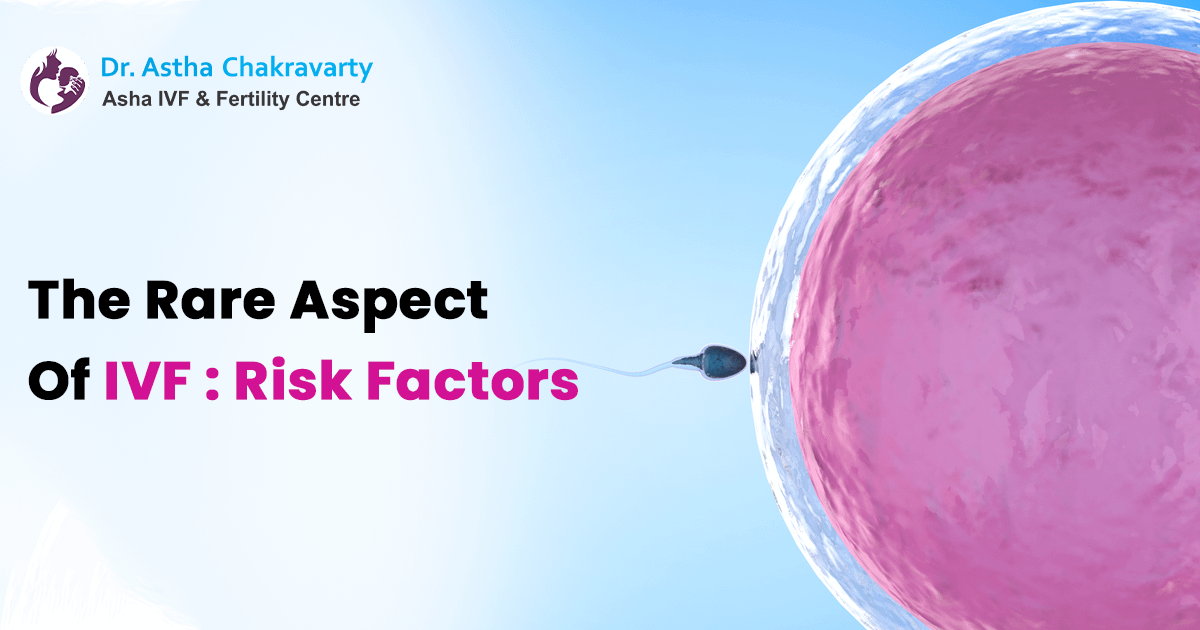
Everyone knows about IVF and its advantages. In this blog, we will go through its rare aspect that no one discusses which is the risk factors of IVF.  Yes, there are some risk factors associated with IVF treatment, which are being discussed here.  We just want to be aware you from every aspect of IVF.

Ectopic pregnancy

In IVF, the embryo is directly inserted inside the uterus. In rare cases, ie 2 to 5 percent of cases, there can be an ectopic pregnancy. When the embryo does not attach to the uterine lining and develops into other parts of the reproductive system, it is called an ectopic pregnancy.

Premature birth

In some rare cases of IVF, a woman can give birth to a child before nine months. The baby may have a low birth weight. Delivery before nine months or premature labour can cause many problems for the baby.

Mental and physical stress

Fertility treatment like IVF puts physical and mental pressure on women. Injections of hormones for treatment cause a lot of pressure and stress on the body. This treatment is also very difficult for couples emotionally.

Multiple pregnancies

In IVF procedure,there can be more than one fetus growing. You may have twins or triplets with IVF. Multiple births can lead to many complications and there is a risk of pregnancy as well. In multiple births, there is a risk of complications like C-section, gestational diabetes, high blood pressure, pre-eclampsia, and premature birth.

Miscarriage

Although there is no evidence to link miscarriage with IVF treatment, there is still a risk of miscarriage in the early months of normal pregnancy. The chances of miscarriage also depend on the age of the mother.

Side effects of drugs

Injection site pain, mood swings, hot flashes, vaginal dryness, flatulence, breast pain, headache, weight gain, nausea, dizziness, bleeding, fatigue, trouble sleeping, and acne side effects may appear due to hormonal injection for short period.

The problem due to egg retrieval

In this procedure, after the egg is removed from the ovary and fertilized, the embryo is inserted into the uterus. There may be mild cramping, vaginal discharge, pain when touching the breast, and constipation.

According to our specialist at Fertility Clinic in Faridabad

These side effects are very rare.There are very less chances of infection and other complications after IVF. Every treatment has its pros and cons. IVF is a boon for childless couples. Your eagerness for a child is greater than these side effects.

Consult with your specialist or visit at the Best Infertility Centre in Faridabad, if you are on the way to an IVF procedure.

Source Link: https://drasthachakravarty.com/the-rare-aspect-of-ivf-risk-factors/

What is Preimplantation Genetic Screening?

 What is Preimplantation Genetic Screening?

The couple who opt for IVF for a child generally wonders if their child would be genetically fit. This stress may be more when intended couples are genetically challenged and think that their child should not have these genetic issues. So in this blog, we are going to reveal the new advanced technique to ensure your child will be genetically fit.

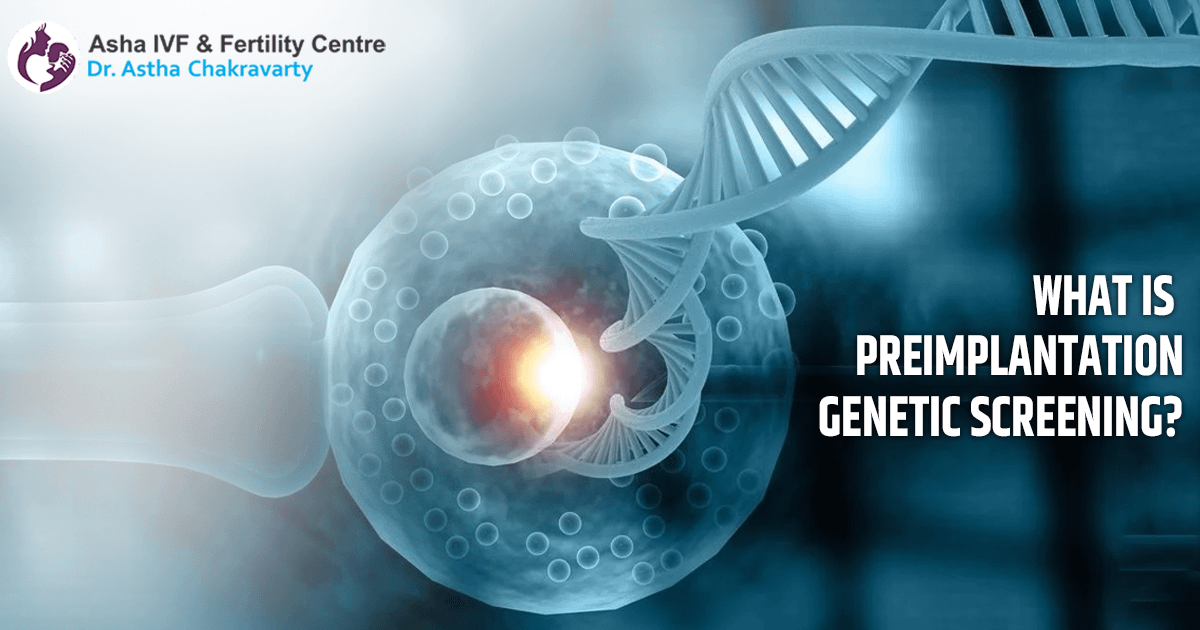
PGS or Preimplantation Genetic Screening is a genetic test that has made IVF most successful than ever! Assisted reproductive treatments can now show infertility and genetic conditions more effectively than before. Couples and individuals affected by a genetic disorder can conceive a biological child. Couples or individuals at increased risk for having embryos with abnormal chromosomes are the best candidates for PGS. These include:

  1. Advanced maternal age above 35
  2. Recurrent miscarriages, or
  3. Previous failed IVF attempts

In a normal person, there are 23 pairs or 46 chromosomes present. Aneuploidy is the condition in which an embryo contains one more or one less chromosome. That means, there are 45 or 47 chromosomes present instead of the normal 46. PGS (Preimplantation Genetic Screening) screens embryos for chromosomal abnormalities (aneuploidy).

Process

PGS test for chromosomal abnormalities. On day 3 or day 5 of embryo development, a few cells are removed from embryos created with IVF. The DNA of these cells will be evaluated for chromosomal defects. At this stage, the embryologist can determine the gender (sex) of the embryos. If parents are interested in family balancing, then only embryos of the desired sex will be transferred to the mother’s uterus.

It diagnoses single gene mutations associated with genetically inherited diseases, e.g. sickle cell anemia, muscular dystrophy, Huntington’s Disease, Fragile X syndrome, cystic fibrosisand many more.

The success rate of PGS

The chance of a successful outcome with PGS in joint with IVF treatment depends on whether any and how many of the embryos produced in an IVF cycle have a normal PGS result. According to the reports a live birth rate is high 60% to 80% when an elective single frozen embryo is transferred in a subsequent cycle. These success rates are very encouraging as most couples who undergo PGS and IVF are at higher risk of producing chromosomally abnormal embryos such as advanced maternal age, previous IVF failures, or recurrent pregnancy losses.

So, from all the above context, we can ensure you if you are worried about any means for IVF and procedures. You can visit the renowned Asha IVF and Fertility CentrePGS clinic in Faridabad.


Source Link: https://drasthachakravarty.com/what-is-preimplantation-genetic-screening/

Monday, 8 June 2020

Know about COVID-19 if you are pregnant

drasthachakravarty

As we all know about the Coronavirus outbreak almost all over the world. There are many pregnant women, who have lots of questions about their pregnancy, baby, delivery, and many more things. To get the answers to all your questions we talked to Dr. Astha Chakravarty, one of the best Gynecologists in Faridabad over a video call, and asked a few questions. Let’s started with the first question:
Question: How can you protect yourself from the deadly coronavirus?
Answer: All you need to do is to maintain good hygiene by frequently wash your hand with soap or sanitize your hands with sanitizer. Avoid going in any type of gathering even if it is in your home also. If anyone is coming from outside then maintain at least 6 ft of distance from them. Take a bath twice in a day. Go outside if urgent only otherwise stay at home. Avoid touching your nose, eyes, mouth until you wash if you coming from outside or if you are outside.
Question: Does becoming ill with the COVID-19 increase risk of miscarriage or other complications?
Answer: Well, According to the CDC, this type of risk has not been documented in any record. In research of the American College of Obstetricians and Gynaecologists, if any woman becomes ill with COVID-19, she has a higher risk of preterm birth, but it is recorded in limited cases only. COVID-19 may not be the direct cause of preterm birth. I requested to all the pregnant women not to trust any type of myth.
Question: If I become sick, what is the risk of passing the virus on to my fetus or newborn?
Answer: We can’t answer this question surely but according to the small studies on limited cases of women during the third trimester of pregnancy that the risk of passing the virus to the fetus or newborn is very low. The study also showed that the virus is not present in breast milk, babies’ throat, or amniotic acid. If a woman is infected during her first trimester, immediately consult your maternity care team.
Question: Should I continue to have prenatal visits?
Answer: To ensuring fetal and maternal health, prenatal visits are important. As we are facing the global pandemic, I am requesting all the pregnant women to consult your doctor via Tele or video consultation. If any doctor is not providing this service then call your doctor and asked for the fixed time slot so that you need to wait for so long in the clinic and follow the guidelines issued by the government.
If you still have any other queries, you can contact Dr. Astha Chakravarty on call. She will guide and help you for sure. So, feel free to consult her. If you want to meet her personally, then visit the Asha Fertility Clinic, one of the best IVFCentres in Faridabad.

Tuesday, 17 March 2020

What happens during the IVF process?


drasthachakravarty

At the IVF hospital in Faridabad, Dr. Astha Chakravarty elaborate that IVF is a procedure used to treat infertility problems. IVF is really popular and effective treatment. IVF procedure can be performing with your own eggs and your partner's sperm or from a known or anonymous donor. IVF definitely increases your chances of pregnancy if you’re having fertility problems.
Procedure of IVF:
1.     In vitro fertilization performed in the lab when the eggs and sperms are fertilized.
2.     The woman is given injections to stimulate her ovaries to grow more follicles which have eggs.
3.     These eggs are retrieved using anaesthesia with the help of a transvaginal ultrasound scan.
4.     The sperm sample is collected to conduct eggs fertilization.
5.     The healthy sperm is introduced with egg under a microscope and being observed for 48 hours for fertilization and developed embryo.
6.     These developed embryos are transferred into the uterus on 3rd or 5th day. The healthiest embryos are transferred into female’s uterus.
7.     Progesterone injection is used to confirm that uterus lining is ready to receive an embryo.
8.     To observe that if embryo is implanted successfully and development started. 
9.     The patient has successfully conceived after implantation. That can be checked a pregnancy test is conducted after 2 weeks by performing a blood test called beta HCG.
The main steps in an IVF cycle are:
·         Controlled Ovarian Hyperstimulation (COH) and Follicular Monitoring
·         HCG Trigger and Oocyte Retrieval
·         Oocyte Culture, Insemination and Fertilization in the IVF Laboratory
·         Embryo Transfer
·         Pregnancy and after check ups

If you have any enquires and concerns for infertility, you can meet the Best infertility specialist in Faridabad, Dr. Astha Chakravarty.